
The 10 Love Languages of Beaujolais
Same grape, Gamay. Ten crus. A range of styles that will make you rethink everything you thought you knew about Beaujolais.

Before heading to Beaujolais, I knew a few things. I liked drinking it chilled in the spring and fall. I knew it had a reputation problem left over from its buzzy Nouveau era in the ‘80s and ‘90s. And if I’m honest, that reputation isn’t entirely undeserved. Nouveau is jammy, thin, and built for a marketing campaign, not a cellar. It’s gimmicky and commercial where the crus are serious and structured. I’d tasted enough of the region to speak confidently about maybe three of the ten crus (Morgon, Fleurie, Brouilly), and I knew the Nouveau conversation, while fair, wasn’t the whole story.
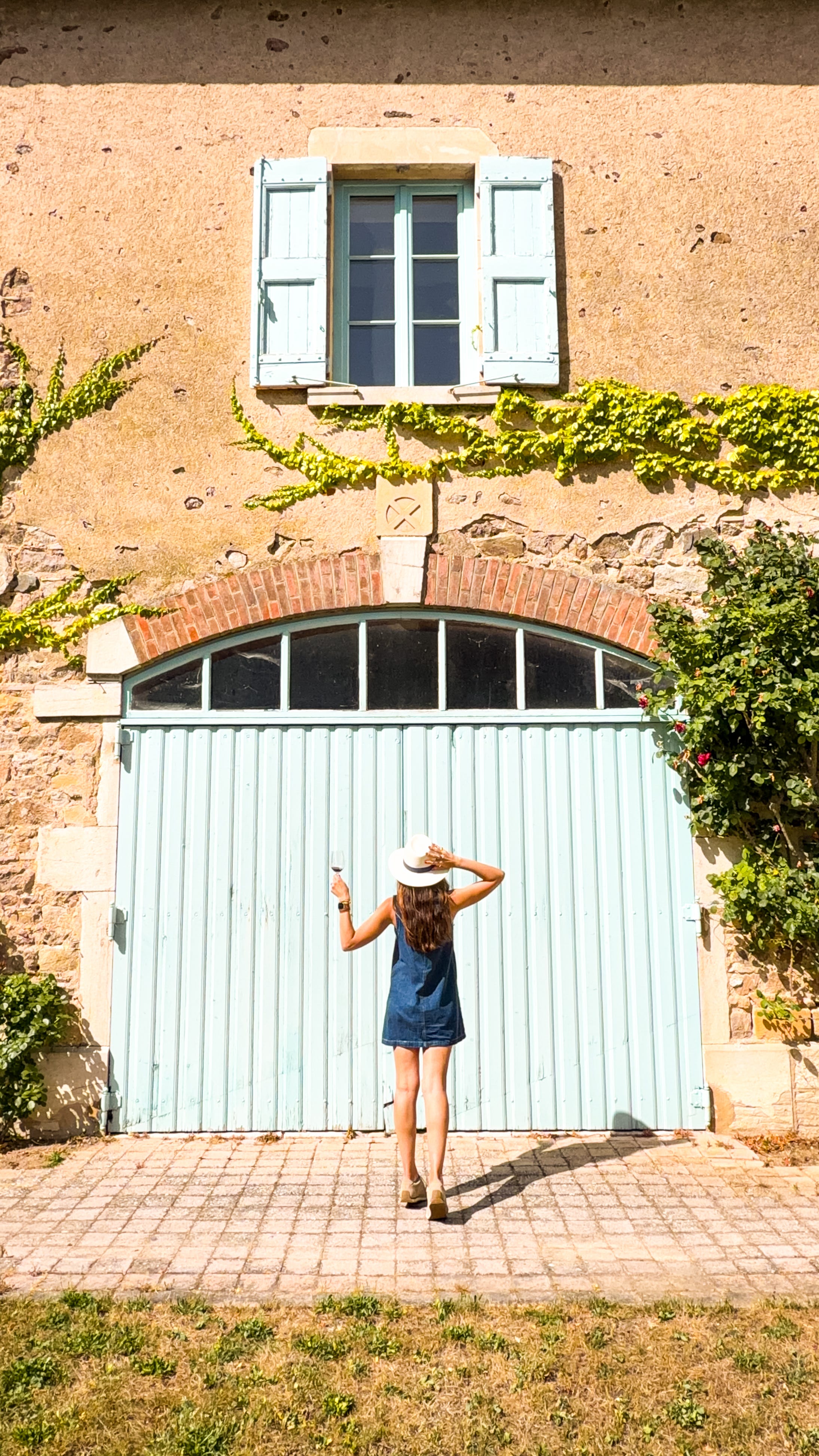
What I didn’t know was the depth. The diversity. The soul. Standing in the blue granite of one cru with the volcanic soil of its neighbor in view, I understood that reading about a region and standing in it, tasting through it appellation by appellation, are two entirely different educations. I wish every wine drinker got the second one.
What I didn’t expect was the personality. Not just variation in style, but the distinct character of each cru. The way Chiroubles feels delicate next to the power of Moulin-à-Vent. The way Morgon lingers on the palate long after Beaujolais is supposed to be done talking. The way Saint-Amour, small and rare enough that half of France can’t get their hands on it, earns its name bottle after bottle.
It stopped feeling like wine education and started feeling like ten separate introductions. And the more producers I met, the more each cru reminded me of a different way people show love.
Brouilly — Words of Affirmation
The largest of the ten crus and the most immediately welcoming. Light, fruity, and built for approachability, Brouilly is the wine that tells you what you want to hear, and means it. Slightly chilled, it’s the easiest entry point into the crus, the first compliment before you’ve even asked for one.
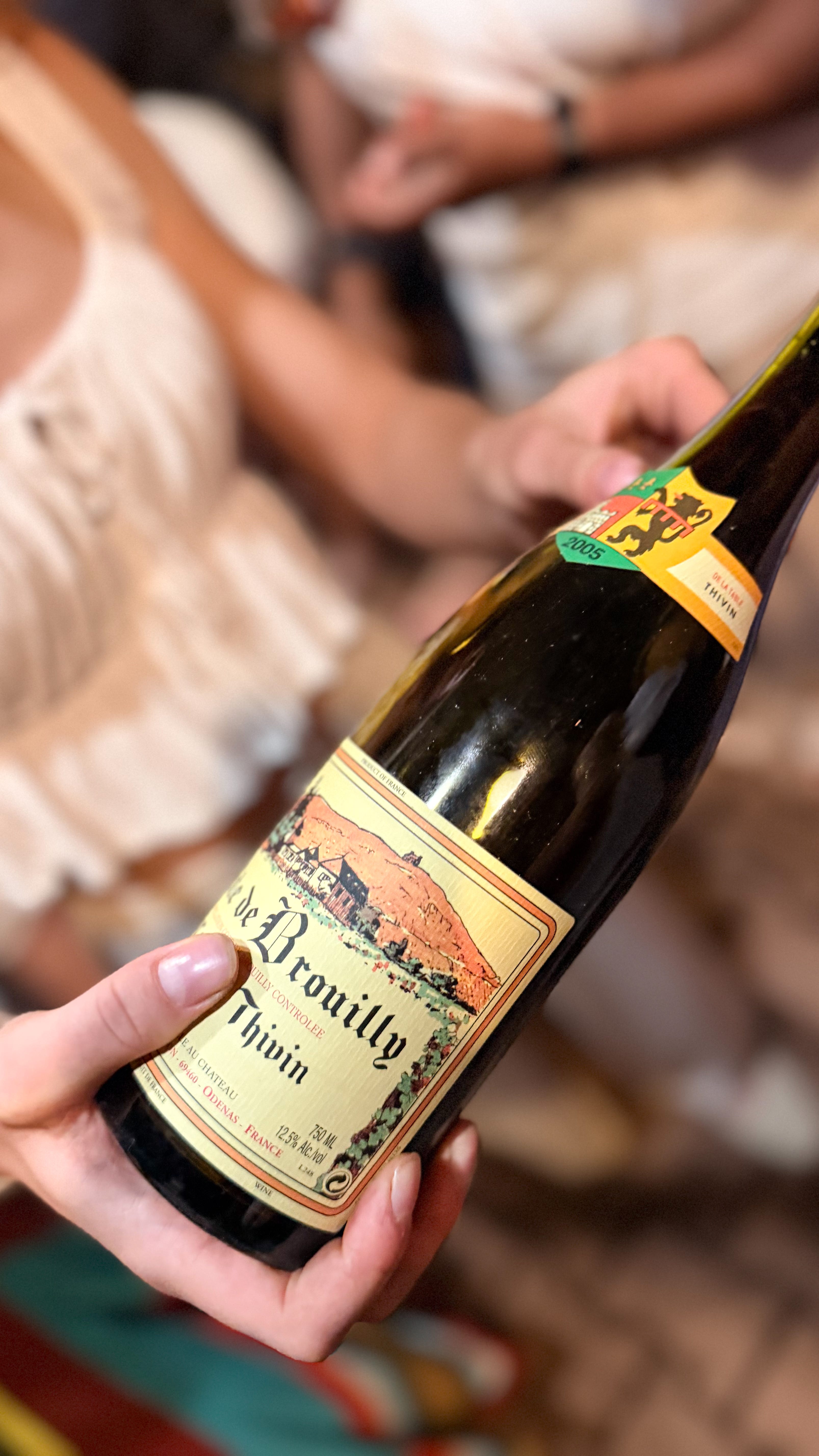
Côte de Brouilly — Acts of Service
Same hill, more ambition. Where Brouilly spreads across the flatlands surrounding Mont Brouilly, Côte de Brouilly climbs the slopes, and the blue volcanic stone shows it. More structure, more depth, more effort. Brouilly’s quieter, more serious sibling, the one that puts in the work without asking for credit.
Régnié — Second Chances
The youngest cru in Beaujolais, officially recognized in 1988, and the one most invested in changing your mind. Granite-driven with real fruit and backbone, Régnié sits in a sweet spot between approachable and serious, fresh enough to win over someone who swears they don’t like red wine, structured enough to hold its own at a proper dinner. It’s the cru still earning trust, and it doesn’t rush you into believing it.
Moulin-à-Vent — Gift Giving
The King of Beaujolais, and it earns the title. Pink granite laced with manganese gives these wines a structure and complexity you don’t find anywhere else in the region. Moulin-à-Vent is built to age, six, ten, fifteen years in the right vintage. It’s the wine that shows up with something worth keeping, and knows it.
Morgon — Physical Touch
Silky but always spicy, rounder and richer than most Beaujolais, with a tactile quality that makes it the most sensory of the ten. The soils shift dramatically from plot to plot across the appellation, and Côte du Py, a small hill of blue stone and granite at the center of it all, is where the typicity runs deepest. You feel Morgon as much as you taste it. Right now it’s having a well deserved moment, fruit freshness with real structure, good value for terroir, a lighter touch than the heavy, tannic wines that dominated the last decade.
Fleurie — Infatuation
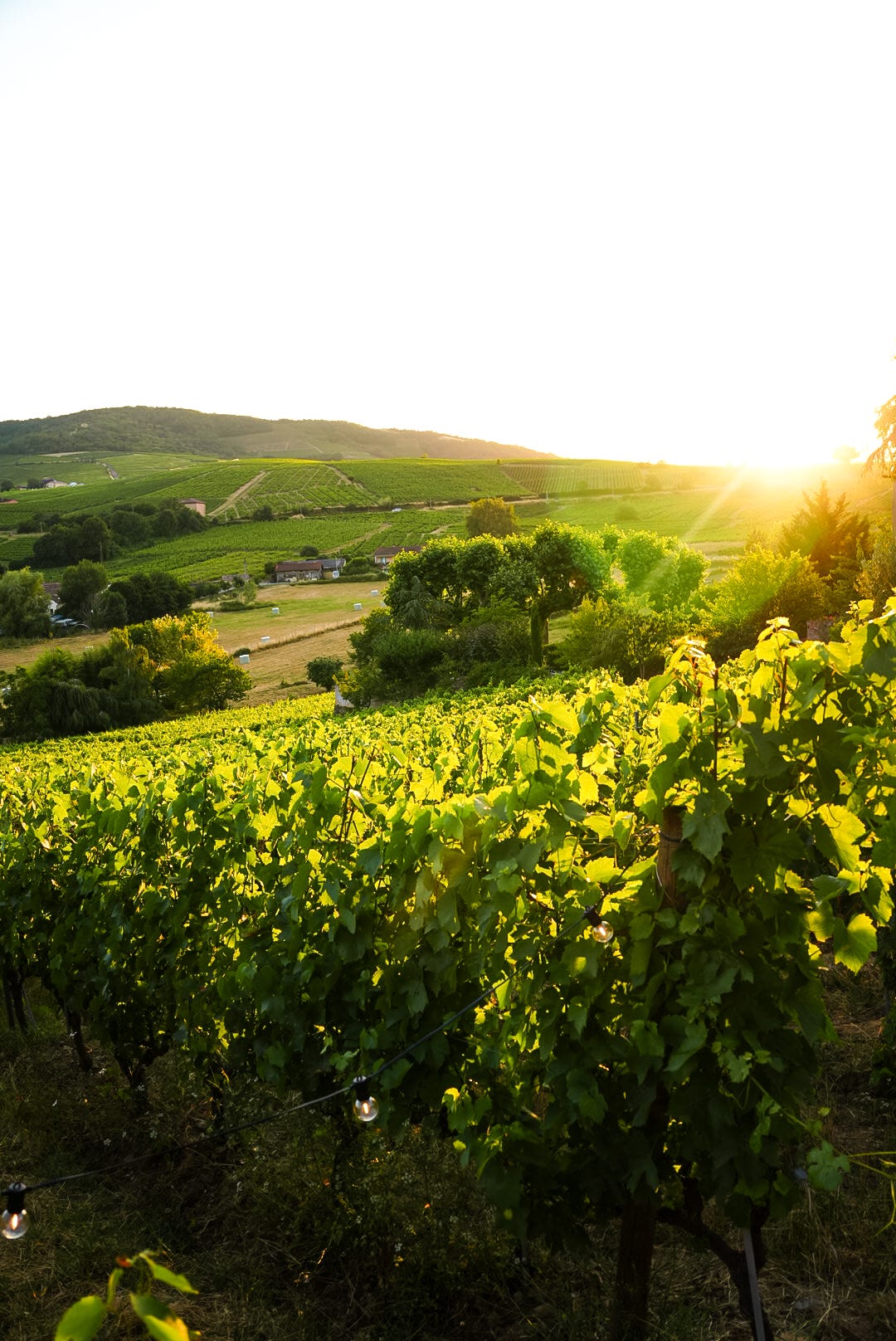
Pink granite nearly everywhere, altitude ranging from 250 to 450 meters, and a finesse that lives up to the name. Fleurie is floral, expressive, unapologetically pretty, the kind of wine that gets you a little giddy before you’ve thought it through. Worth watching, premier cru classifications are currently in development, expected within the next few years. The wines are already there. The crush was never going to last this long by accident.
Chiroubles — Quality Time
The highest cru in Beaujolais, with vines climbing to 600 meters and an average altitude around 400. The altitude keeps temperatures cool, yields small, and the wines fresh in a way that takes patience to fully appreciate. Chiroubles is delicate, unhurried, and rewards the people willing to slow down with it. Around 80 producers work this appellation in a village of about 400 people. The scale is almost hard to believe when the wine is this good.
Juliénas — Loyalty
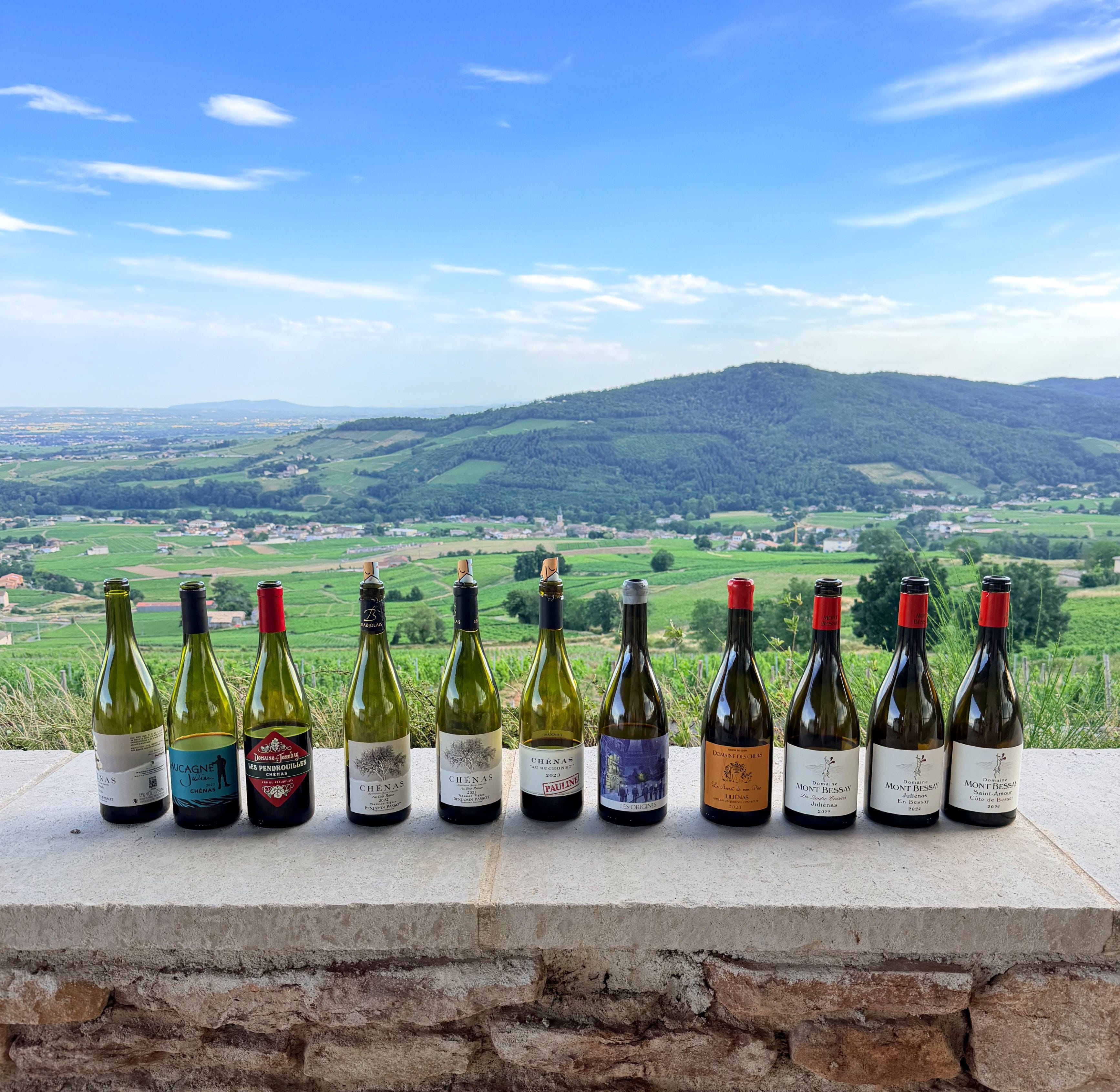
Named for Julius Caesar, structured and reliable without ever demanding the spotlight. Juliénas holds more blue stone than any other cru in Beaujolais, nearly 42 percent of its soil composition, and south facing slopes give the wines real backbone. This is the cru built for the long dinner, the one that holds up through every course, still pouring well after everyone else has said their piece. It’s not proving anything. It’s just still here.
Chénas — Receiving Gifts
The smallest cru in Beaujolais at around 250 hectares, tucked right against Moulin-à-Vent and consistently overlooked in its shadow. Clay and granite soils give the wines a generous, full-bodied character that surprises people who find it. Most people never go looking for Chénas. The ones who do don’t forget it.
Saint-Amour — The Love Letter
The name says everything. Granite and sandstone soils, east facing slopes, silky texture with floral aromatics and a spice that lingers. Saint-Amour is one of Beaujolais’s smallest crus at 330 hectares, popular in France and nearly impossible to find outside it, there just isn’t enough to go around. You don’t pour Saint-Amour to make conversation. You pour it when you’ve already decided how you feel.
Ten crus, same grape, ten different ways of saying I love you. That’s Beaujolais. Not a Nouveau hangover, not a single note. Ten personalities, more range than most regions twice its size.
I love the way you described each appellation. Beaujolais is truly a gem of a region.
God i love gamay